Jan & John Maggs
Antiques and Art
How the Internet has changed how we do business
(February 2015)
~ ~ ~ ~ ~ ~ ~ ~ ~ ~ ~ ~ ~ ~ ~ ~ ~ ~ ~ ~ ~ ~ ~ ~ ~ ~ ~ ~ ~ ~ ~ ~ ~ ~ ~ ~ ~ ~ ~ ~ ~ ~ ~ ~ ~ ~ ~ ~ ~ ~ ~ ~ ~
Some thirty years ago, when we were holding tag sales on Saturday mornings outside of our Northampton apartment to raise the $2400 we needed as a deposit on the derelict property in Conway that we hoped to buy, we had no plan to go into business together. Tag sales were fun and could be profitable if we bought carefully, but they were simply a means to an end and inexpensive entertainment. We became regulars at local auctions and were seen frequently at other people's tag sales. We bought things we liked - if the price was right. Within a few weeks we had not only raised the money we needed to secure our present-day home in Conway, but we had also inadvertantly taken the first small steps towards a new, shared career.
The purchase of our new old house, rather than being an end in itself, turned out to be only the first step in our redefinition of ourselves. Our Saturday morning tag sale hunting became an important source of tools and building materials for our huge restoration project. And, as we continued to hold tag sales at our apartment in Northampton, it was clear to us that our knowledge, experience, and energy would support a grander enterprise.
We applied for a Massachusetts resale certificate and rented a small showcase in the nearby Hadley Antiques Center, a large multi-dealer shop filled mostly with vintage collectables. (We came to refer to it as the "Hardly Antique Center"). Around the same time, we began setting up at a local Sunday morning flea market, where before long we found that around 90% of our sales were to dealers, who arrived at opening time and were always the first to scour the market. Our mornings at the flea market were remarkably successful and taught us a great deal about the business.
We left the Hadley shop when we were offered a booth at a slightly more upscale group shop in Deerfield, where we were able to display our things in a room setting, rather than in a locked cabinet. Our sales in Deerfield were considerably stronger than in Hadley, and our names began to be heard in local antiquing circles. These positive ventures, coupled with the encouragement of a few dealer friends, convinced us that we were ready to consider exhibiting at a show.
It was probably at this point that we figured out that, to be in business, we needed a name. Our home was in the center of the district of Conway known as "Pumpkin Hollow", allegedly because of the ripe pumpkins that rolled down the steep hills that surrounded the area each October. The name was not only appealing, it also perpetuated a local legend. How could we have chosen any other name than Pumpkin Hollow Antiques?
After trying our luck at a small local show and a three-day stand in Brimfield, we signed up for our first "real" antiques show, one of Betty Forbes's summer outdoor events, this one on the Glastonbury Green. Early one Saturday morning in August of 1989 we drove our van to Connecticut, bringing with us the best things in our inventory, all priced reasonably and ready to find new homes. Neither of us will ever forget driving along the street in front of the green and seeing scores of 17th and 18th century chairs, tables, and cupboards, as well as pewter, ceramics, glass, silver, and other smalls, randomly arranged on blankets and tables in dealers' booths. We sold very well on that first outing but also learned quickly that we could buy from many of these dealers. We can't remember whether we returned with a lighter or a heavier load, but we do know that our bank account was healthier on Monday than it had been on Friday. We were hooked.
We exhibited at another few shows that year and, although not all were as successful as Glastonbury had been, we could see that shows were the way we'd make our mark in the antiques field. Despite the fact that we both had full-time jobs, we began adding shows to our schedule; in 1990 we did 22; in 1991, 26; 1992, 28. In 1993 we added two shows in Farmington and two in Wilton, and in subsequent years the number increased gradually until we reached our peak in 1997, setting up at 43 shows, nearly one per week.
Sometime during those years we began to feel that we had come of age. We changed our business name to Jan and John Maggs Antiques.
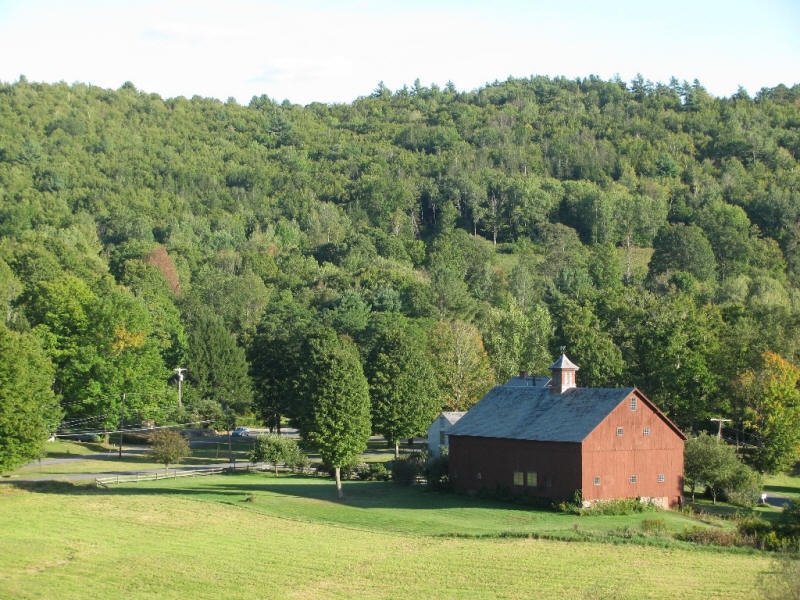
Meanwhile, we had opened a shop at our home in Conway, in the huge 19th century barn which we had begun to restore. We had also purchased the domain name jmaggs.com and were maintaining a website that put some of our inventory online, along with show schedules and shop hours. The exposure given by these new aspects of our business allowed us to reduce our show activity slightly. By the time we published our first newsletter in 2004, we were down to only 29 shows.
In January of 2004 we sent a massive mailing to the several hundred customers on our postcard mailing list, providing each with a self-addressed reply form, which asked whether or not thay would like to receive our emailings. A few hundred said "yes", and we were on our way. We published our first newsletter in February, and it has been followed by another each month, our goal from the beginning.
Since 2004 our mailing list has continued to grow, largely through the business cards we hand out in great numbers at antiques shows and by word of mouth. As the years have gone by, more and more of our business is with customers who live far from Massachusetts. In fact, a few of our most loyal "regulars" are people we've never met. As our online presence has grown, our need to exhibit at shows has decreased. In 2004, we did twenty-nine shows away from home. This year we've scheduled only six.
This change is being reflected throughout the antiques business. While show sales have become less predictable and booth rents remain the same or increase, many dealers are cutting back on the number of shows they sign up for. Consequently, many long-established shows are being cancelled because not enough dealers are willing to pay the price. The failure of Bill Walter Shows' Rhinebeck is the most recent example that has affected us, although we're confident that Barn Star's new Antiques at Rhinebeck will make a near-seamless transition.
Nevertheless, there are no sure things in today's antiques show world. We'll continue to publish monthly newsletters and endeavor to keep our readership engaged in our business and our lives. Ours is a wonderful existence, and we take pride and pleasure in sharing it with you.
~ ~ ~ ~ ~ ~ ~ ~ ~ ~ ~ ~ ~ ~ ~ ~ ~ ~ ~ ~ ~ ~ ~ ~ ~ ~ ~ ~ ~ ~ ~ ~ ~ ~ ~ ~ ~ ~ ~ ~ ~ ~ ~ ~ ~ ~ ~ ~ ~ ~ ~ ~ ~
Click HERE to visit the J&J Maggs Antiques home page.