Jan & John Maggs
Antiques and Art
Interpreting Judith Leyster's Young Woman being Harassed by a Man
~ ~ ~ ~ ~ ~ ~ ~ ~ ~ ~ ~ ~ ~ ~ ~ ~ ~ ~ ~ ~ ~ ~ ~ ~ ~ ~ ~ ~ ~ ~ ~ ~ ~ ~ ~ ~ ~ ~ ~ ~ ~ ~ ~ ~ ~ ~ ~ ~ ~ ~ ~ ~
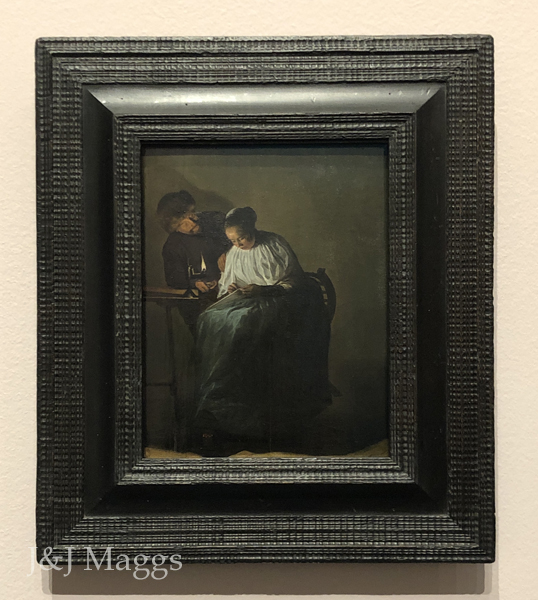
(Judith Leyster) specialized in portrait-like genre scenes, typically of one to three figures, who generally exude good cheer and are shown against a plain background. Many are children, and others are men drinking. Leyster was particularly innovative in her domestic genre scenes. These are quiet scenes of women at home, often with candle- or lamplight, particularly from a woman's point of view. The Proposition (Mauritshuis, The Hague) is an unusual variant on these scenes, said by some to show a girl receiving unwelcome advances, instead of depicting a willing prostitute, the more common scene under such a title. The fact that the female subject is sewing in the scene may also have double meanings as the Dutch word for sewing (naaien) is sometimes used as a metaphor for sex. However, this interpretation is not universally accepted. Ann Sutherland Harris has interpreted the painting to be of a woman receiving an honest marriage proposal. Leyster's painting Proposition is different from other paintings that depict sex work, as she is not wearing something low-cut or getting money for a transaction. Instead, the painting depicts a quiet sense of intimacy, leading art historians such as Hofrichter to speculate that Leyster was resisting common stereotypes about women and sex. She chose to depict a virtuous woman rather than a woman stealing from a man. In The Proposition, the light does much of the storytelling. Leyster paints a man looming behind the woman, offering her coins, while defined shadows create shapes and contrast between the light red glow of the foot warmer. Leyster creates light that, although it is not the most realistic, is placed there intentionally to showcase the deep focus that will not break as the man tries to distract her from her sewing. (Wikipedia)
~ ~ ~ ~ ~ ~ ~ ~ ~ ~ ~ ~ ~ ~ ~ ~ ~ ~ ~ ~ ~ ~ ~ ~ ~ ~ ~ ~ ~ ~ ~ ~ ~ ~ ~ ~ ~ ~ ~ ~ ~ ~ ~ ~ ~ ~ ~ ~ ~ ~ ~ ~ ~
Click HERE to return to Women Artists from Antwerp to Amsterdam - 1600 - 1750