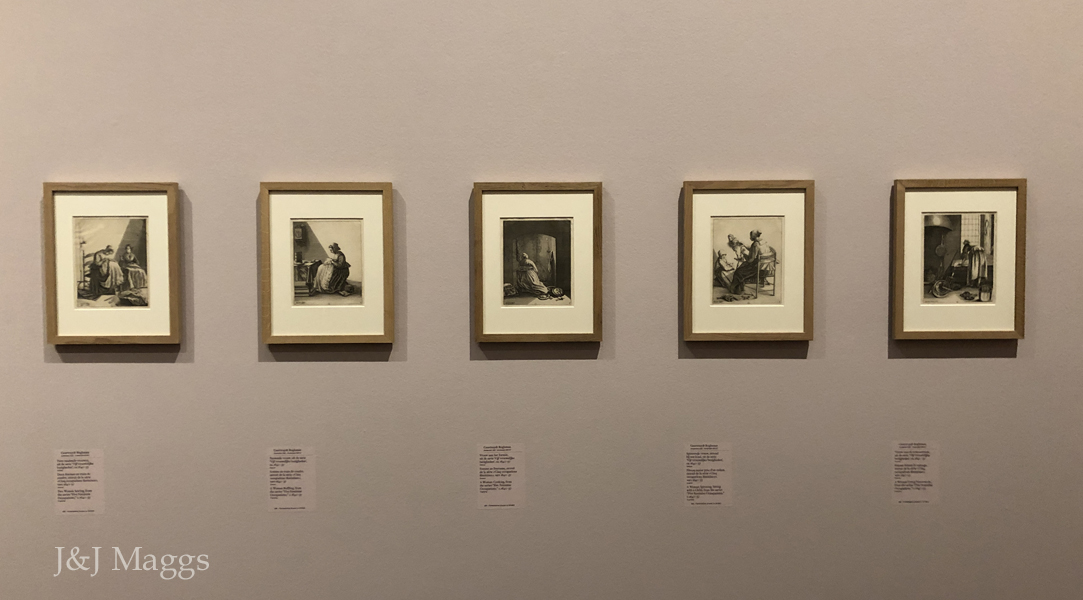
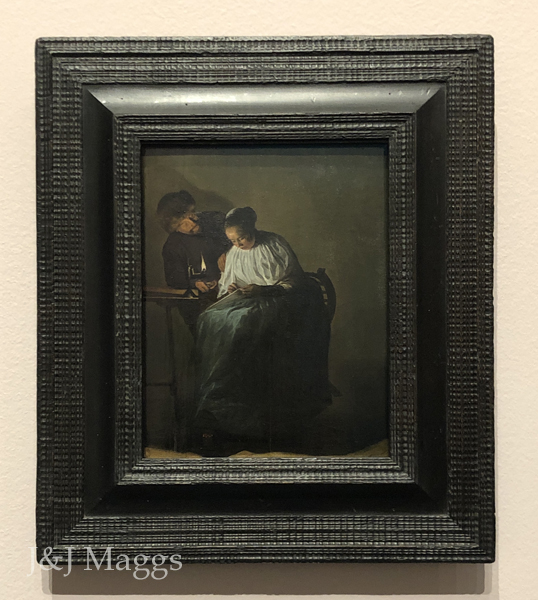
Jan & John Maggs
Antiques and Art
Women Artists from Antwerp to Amsterdam - 1600 - 1750
~ ~ ~ ~ ~ ~ ~ ~ ~ ~ ~ ~ ~ ~ ~ ~ ~ ~ ~ ~ ~ ~ ~ ~ ~ ~ ~ ~ ~ ~
Since our favorite bed and breakfast in the world, Huis Koning in Bruges, is no more, we decided to find accommodation in nearby Ghent, home to one of the finest of the Belgian national museums and of Jan Van Eyck's Ghent Altarpiece. Our roomy apartment, located a short walk from the Gent-Dampoort train station, would be our gateway to Belgium for nearly a week.
On our first morning we walked to the station, where we knew we'd find a line of taxis waiting for passengers to leave the station. We approached the first in line, and he drove us through the streets of this quite large city to the Museum voor Schone Kunsten, a museum rich in the art of the Golden Age that has been a favorite for several decades. We planned to spend the day.
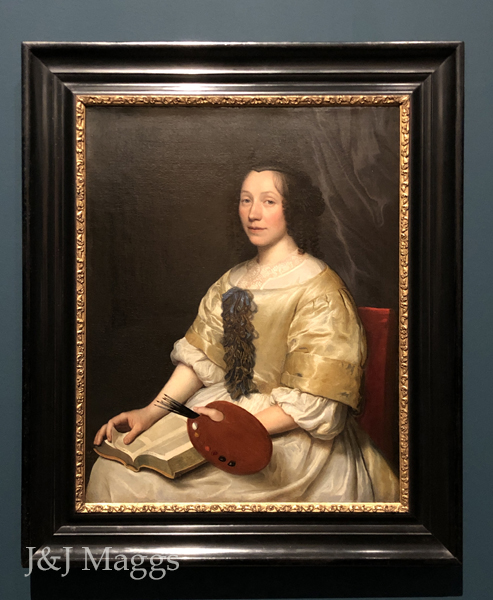
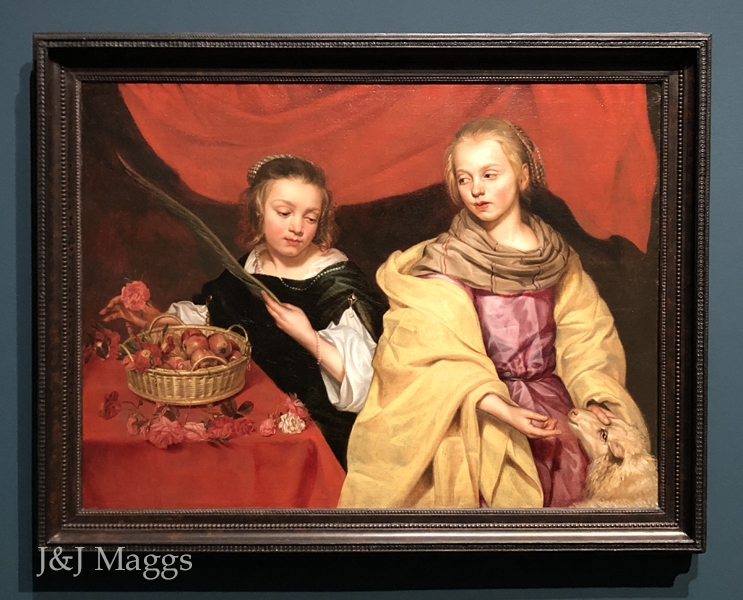
This visit would be special, since the museum had assembled some 150 pieces, most by named women artists, in an exhibition titled "Women Artists from Antwerp to Amsterdam - 1600 - 1750". We've always had a special place in our hearts for the paintings of Judith Leyster and Clara Peeters, but now we were to be introduced to several female painters of the period whose work had until now escaped our notice.
~ ~ ~ ~ ~ ~ ~ ~ ~ ~ ~ ~ ~ ~ ~ ~ ~ ~ ~ ~ ~ ~ ~ ~ ~ ~ ~ ~ ~ ~
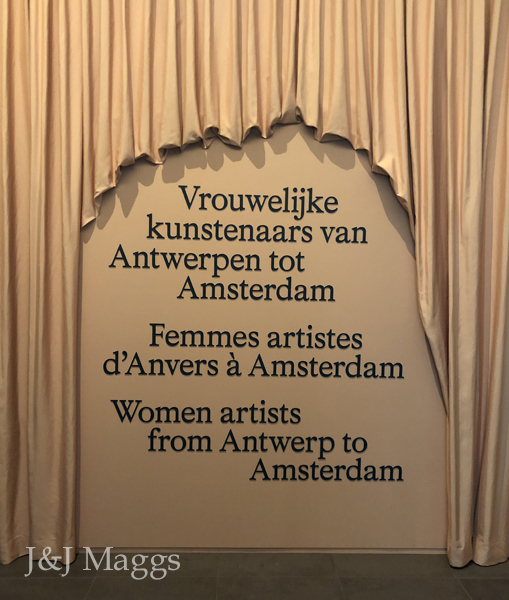
The curators' well-deserved pride in the exhibition was announced in this introduction:
Between 1600 and 1750, women played an important role in the artistic life of the Low Countries. Nevertheless, our appreciation of Flemish and Dutch art is still largely shaped by the male painters of the period, such as Peter Paul Rubens, Anthony van Dyck, and Johannes Vermeer. This exhibition places their female colleagues in the spot-light, revealing the richness and diversity of their contributions to the visual culture of the 17th and early 18th centuries. Women were active not only as painters, but also as engravers, sculptors and paper cutters, and were recognized and valued for their work and talent during their lifetimes. Many of their personal stories, however, have long since been forgotten or overlooked.
~ ~ ~ ~ ~ ~ ~ ~ ~ ~ ~ ~ ~ ~ ~ ~ ~ ~ ~ ~ ~ ~ ~ ~ ~ ~ ~ ~ ~ ~
This exhibition assembles a few works by or about these exceptionally talented artists. The images taken as we viewed the works last month reflect their consistent high quality and, in several instances, provide us with a glimpse of the artists. We've attempted to present the multi-faceted exhibition as we experienced it in Ghent one month ago.
~ ~ ~ ~ ~ ~ ~ ~ ~ ~ ~ ~ ~ ~ ~ ~ ~ ~ ~ ~ ~ ~ ~ ~ ~ ~ ~ ~ ~ ~
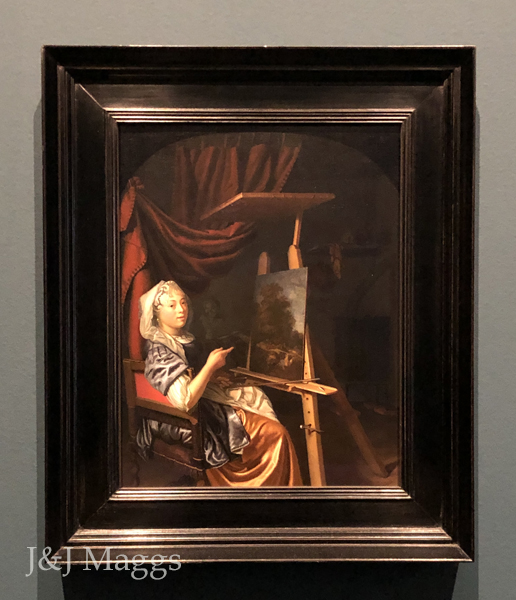
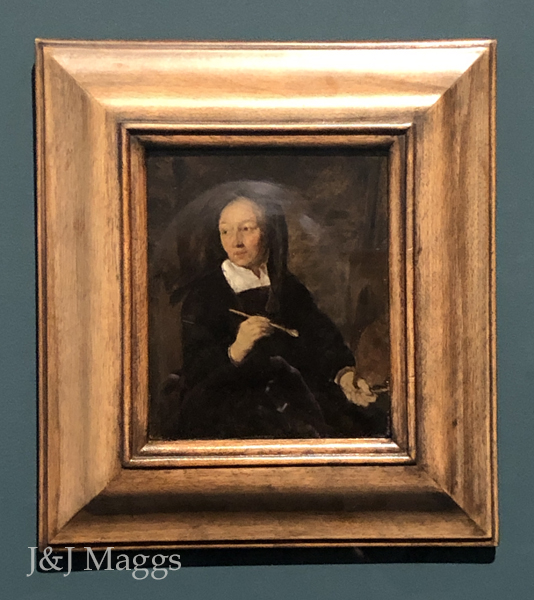
Self-Portrait in the Studio, c. 1680
Maria Schalcken (ca. 1645/1699)
Born in Dordrecht, Maria was the younger sister of the painter Godfred Schalken, who was a student of Samuel van Hoogstraten and Gerard Dou. Although she gave up her studies when she married the merchant Severijn van Bracht, this and the single other work known to be hers show her as a very capable painter. Some scholars feel that that at least some paintings attributed to her older brother may be hers.
(Painting on loan from the Museum of Fine Arts in Boston)
~ ~ ~ ~ ~ ~ ~ ~ ~ ~ ~ ~ ~ ~ ~ ~ ~ ~ ~ ~ ~ ~ ~ ~ ~ ~ ~ ~ ~ ~
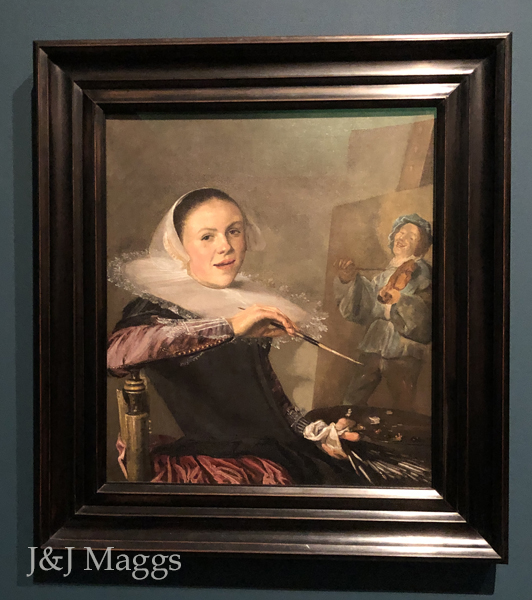
Self Portrait, c. 1630
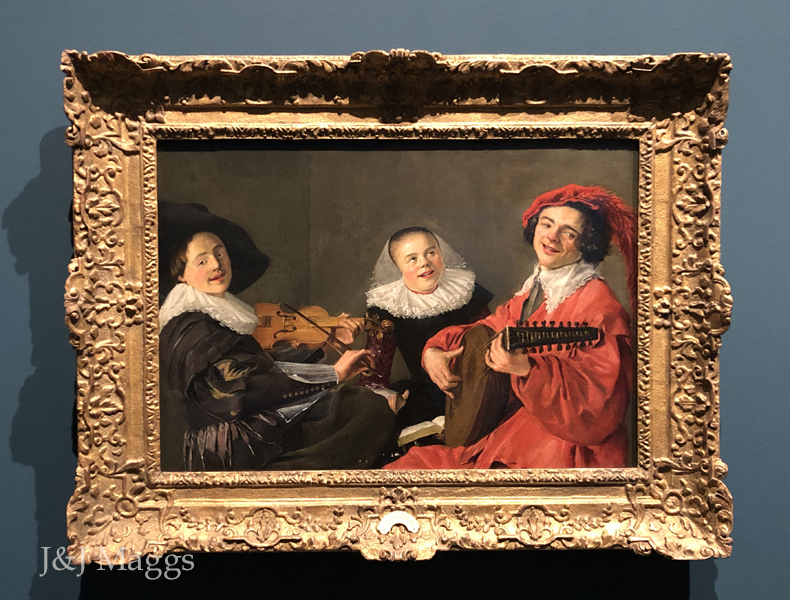
Judith Leyster (1609-1660)
Leyster's work, highly regarded in the 17th century, was forgotten after her death. As her paintings were rediscovered over the years many were attributed to prominent male artists, most notably Frans Hals, to whose portraits hers bear a striking resemblance, and her husband, Jan Miense Molenaer.
~ ~ ~ ~ ~ ~ ~ ~ ~ ~ ~ ~ ~ ~ ~ ~ ~ ~ ~ ~ ~ ~ ~ ~ ~ ~ ~ ~ ~ ~
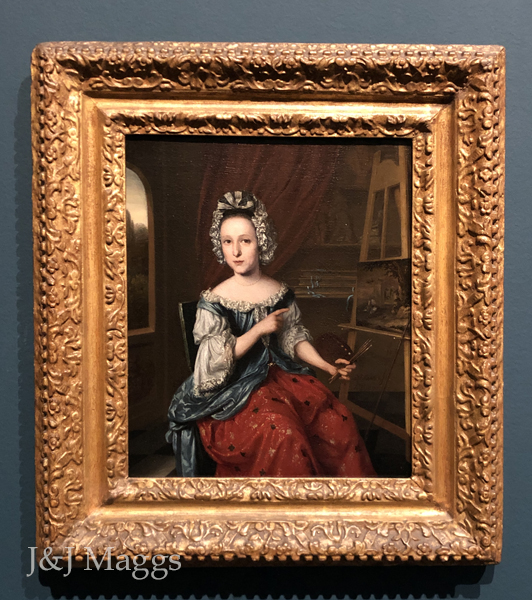
Portrait of Cornelia de Rijk in Her Studio, 1689
Gerrit van Goor (1645 - 1690)
Cornelia de Rijk was best known in her lifetime for her highly detailed studies of birds and insects. This portrait was painted by her first husband, Gerrit van Goor.
~ ~ ~ ~ ~ ~ ~ ~ ~ ~ ~ ~ ~ ~ ~ ~ ~ ~ ~ ~ ~ ~ ~ ~ ~ ~ ~ ~ ~ ~
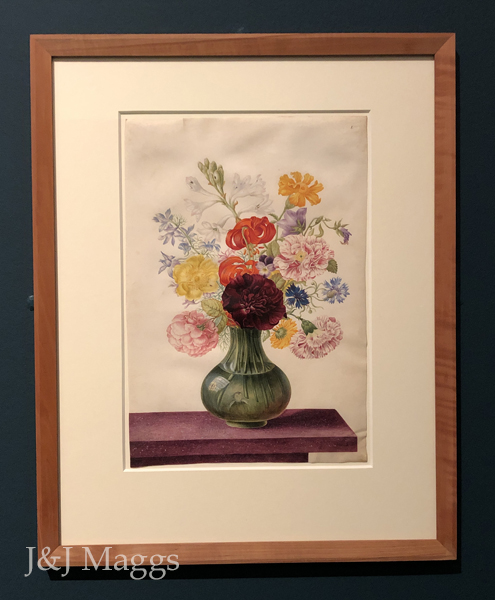
Vase of Flowers with Self-Portrait, 1698
Johanna Helena Herolt (1668 - 1723)
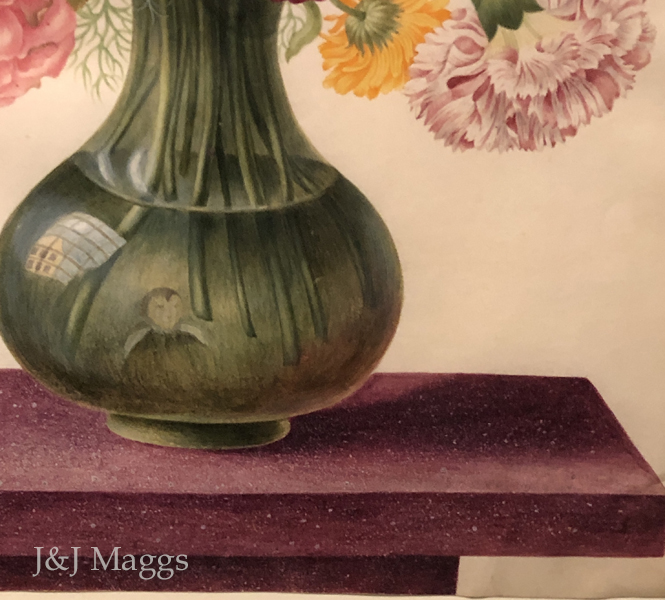
Best known as a botanical painter, Johanna learned to paint from her parents. Her mother was Maria Sibylla Merian, a well-known botanical artist, whose skilled depiction of details was passed on to her daughter. This technique impresses, but it was her tongue-in-cheek "portrait" (below) that captured our fancies.
~ ~ ~ ~ ~ ~ ~ ~ ~ ~ ~ ~ ~ ~ ~ ~ ~ ~ ~ ~ ~ ~ ~ ~ ~ ~ ~ ~ ~ ~
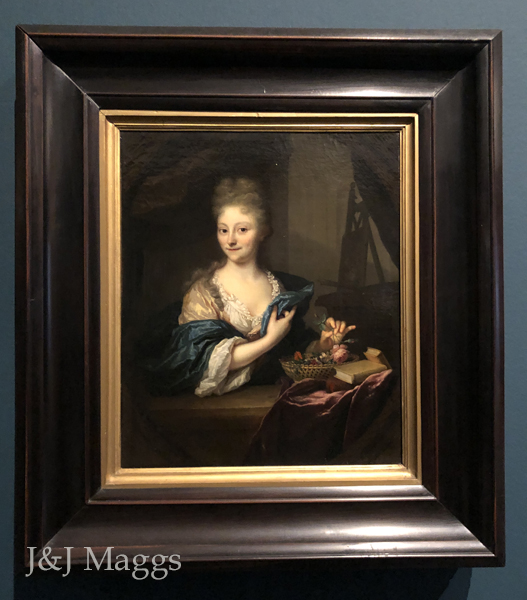
Portrait of Catharina Backer, 1713
Arnold Boonen (1669 - 1729)